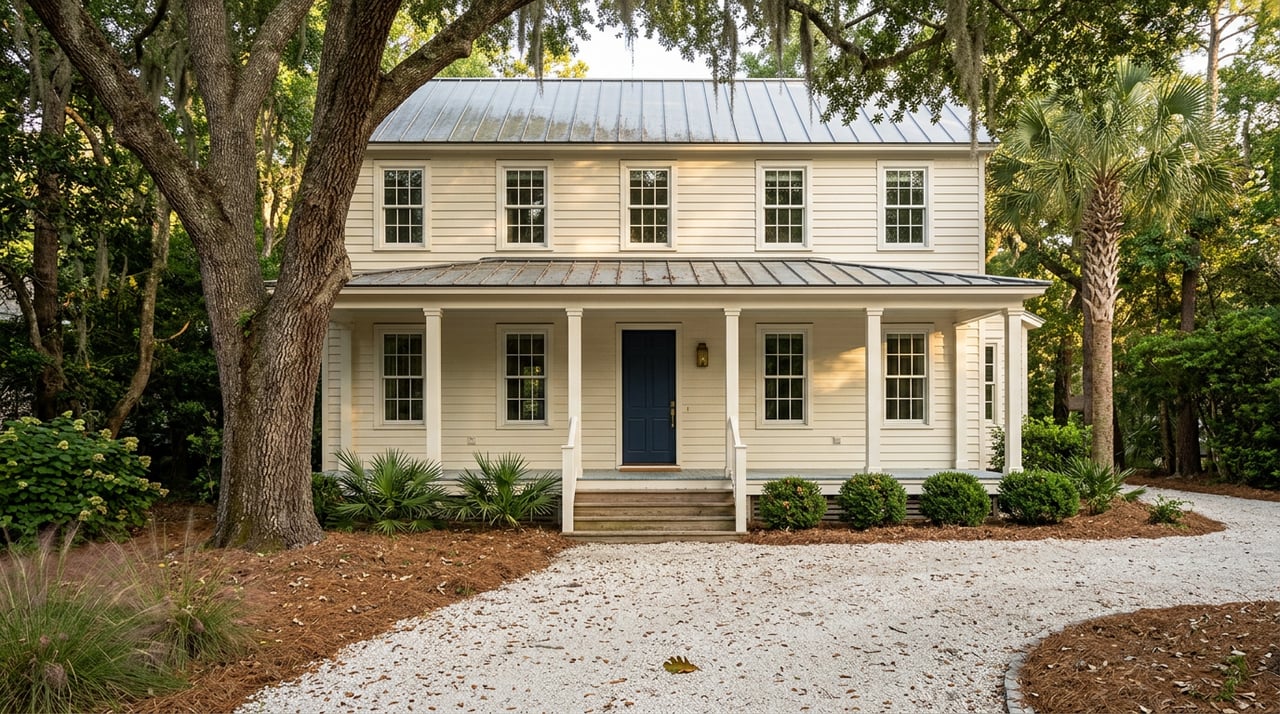
A Quiet Week On The Peninsula: Daily Rhythms Of Spanish Wells
August 6, 2026
August 6, 2026
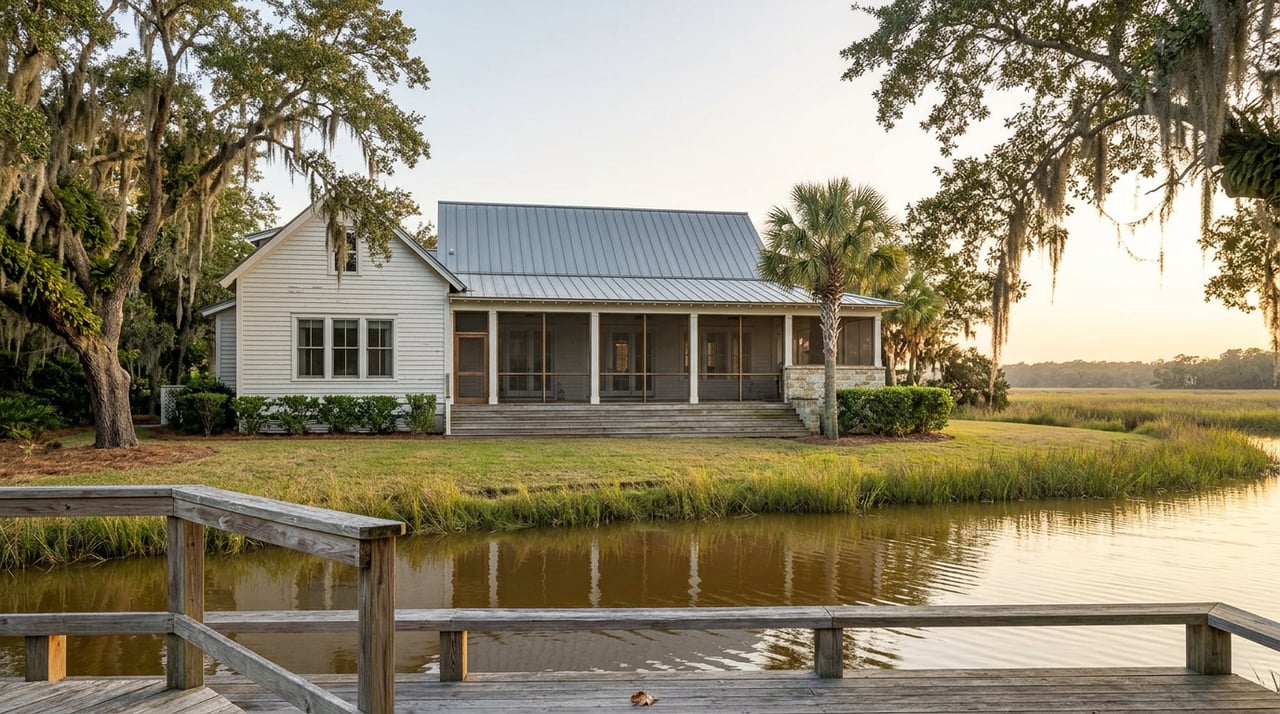
Most Hilton Head neighborhoods run on a resort clock. Guests arrive Saturday, leave Saturday, and the week in between is shaped by whoever booked the villa next door. Spanish Wells doesn't do that. There are no short-term rentals here, no rotating cast of vacationers, no gate stopping cars at the entrance. What you get instead is a working residential peninsula of roughly two hundred homes on four hundred acres, bordered by water on three sides, where the week has a shape that residents actually recognize from one month to the next.
That shape is the point of this post. Not what Spanish Wells is, but what a week here actually feels like once you strip out the brochure language.
The single fact that most explains the rhythm of the neighborhood is this: the Spanish Wells Club is separate from the community itself. You can live on Brams Point Road and never set foot in the clubhouse. You can also be a full member without owning a home inside the community. Membership carries its own dues, and it sits on top of the mandatory Spanish Wells Community Association dues, which run $2,360 a year for improved lots and $1,540 for unimproved lots in 2026.
That structure matters for the resident's week in a way most guides skip. In a plantation where the club is bundled into ownership, the clubhouse becomes the default. Here it's a choice, so the members who show up are the ones who actually want to be there. The Holbrook Grill, the club's casual room overlooking Calibogue Sound, keeps a compressed schedule of Wednesday through Sunday, 11 a.m. to 6 p.m. That isn't a limitation. It's a design decision that reflects who's using it: residents who want a sunset dinner two or three nights a week, not a full-service restaurant open every day for a passing crowd.
The nine-hole course, originally laid out by George Cobb and later reimagined by Clyde Johnston, plays alternate tees for an eighteen-hole round. Four Har-Tru clay courts sit under lights for evening play. Pickleball has folded into the mix. The deepwater dock behind the clubhouse handles fishing trips and dolphin-watching for members and their guests. None of that is unusual for a Lowcountry club. What's unusual is the scale. A club serving a community of roughly two hundred homes runs at a tempo that isn't possible at a thousand-home plantation.
The nearest full restaurant row sits about two miles south on Squire Pope Road, at the cluster of docks around Skull Creek. For a Spanish Wells resident deciding where to eat tonight, that stretch is the practical answer more often than the clubhouse is. Three restaurants dominate the walk:
| Where | What it is | Distance from Spanish Wells |
|---|---|---|
| Hudson's Seafood House on the Docks | Fresh-caught seafood, on the docks since 1967 | ~2 miles |
| Skull Creek Boathouse | Waterfront seafood and sushi, Marker 13 Buoy Bar outside | ~2 miles |
| Skull Creek Dockside | Casual dockside bar and seafood adjacent to Skull Creek Marina | ~2 miles |
The three sit close enough that "we're going to Skull Creek" is the sentence, not a specific restaurant. Hudson's is the institution, still built around the shrimp boats that unload at its own dock. The Boathouse, part of the SERG Group, runs an in-house sushi program at the Dive Bar and pushes its sunset service on the outdoor Marker 13 Buoy Bar. Dockside is the neighbor that fills the gap when the other two have a wait, which they will in summer. Tripadvisor reviewers passing through this year noted a new ice cream shop tucked into the same stretch of piers.
For residents, the useful thing to know is that this is a working dock area, not a resort strip. It runs on locals. The wait on a Friday evening is real, but it moves.
Because there are no short-term rentals, the community's social calendar isn't organized around tourist peaks. It's organized around the same handful of dates every year. Two anchor the summer and fall:
Those two events do more work than a full activities calendar would in a larger community. They're the reason people who moved here in the 1980s still know their neighbors' kids' names.
The club layers its own rhythm on top: sunset socials at the Holbrook Grill, holiday parties in the Holbrook Room, member tournaments on the Cobb course, clinics on the clay courts. If you're a member, that's most of your social week. If you're not, the community traditions still carry you.
The absence of short-term rentals is the quiet mechanism behind almost everything a resident notices here. It's why the streets are calm on Saturday afternoons. It's why the club can run a five-day dining schedule instead of a seven-day one. It's why neighbors recognize each other's cars.
A few numbers explain more than the brochures do.
Roughly two hundred single-family homes on four hundred acres works out to lots that regularly exceed one acre, with about half offering deepwater access and private docks. The other half look onto the golf course or wooded interior. That density is the reason a walk from a middle-of-the-community home to the clubhouse still feels like a walk, not a stroll to the mailbox.
Calibogue Sound, off the peninsula's southern tip, is among the deepest natural channels on the island. That single geographic fact is why sportfishing owners settled here in the first place, and it's why the deepwater dock at the club matters more than the acreage of the course. A boat leaving Spanish Wells is in fishable water in minutes, not after a slow crawl through no-wake zones.
The history sits underneath all of it. The name comes from Spanish colonial crews who came ashore on the northwest tip to dig freshwater wells before English settlement of the island. In the twentieth century, the area was a fishing enclave. Charlie Simmons Sr., known locally as "Mr. Transportation," ran Simmons Fishing Camp here in the pre-bridge era, providing rest for travelers crossing to and from the mainland. A boxing gym in the community produced the Cohen family of professional heavyweight boxers. The gated residential form of Spanish Wells came together in the latter decades of the twentieth century, built around the deepwater access that had drawn people here for centuries.
That history is not decoration. It's the reason the community has a working-peninsula feel rather than a resort feel. It was never designed as a rental market.
Pulling it together: a typical week for a Spanish Wells household with club membership might run tennis or pickleball two or three mornings, nine holes on Wednesday, a Holbrook Grill dinner on Thursday or Friday at sunset, and a Saturday out to Hudson's or Skull Creek Boathouse when the club dining room is closed or the family wants a change. A week for a household without club membership swaps the club days for private-dock time, kayak runs on Broad Creek, and a longer standing rotation among the three Squire Pope restaurants.
Both weeks end at the same place: a quiet street on a Sunday evening, oaks and Spanish moss overhead, the occasional golf cart passing a neighbor walking a dog. That's the rhythm the peninsula was built to protect, and it's the one residents keep choosing.
If you already live here and someone asks what daily life is actually like, the honest answer isn't a list of amenities. It's the rhythm above.
For a closer conversation about Spanish Wells, the club, or any of the north-end neighborhoods, Tyler Stone is available to talk through the specifics.
Contact Tyler


Whether you’re buying your first home, selling a luxury property, or investing in Hilton Head Island real estate, Tyler Stone provides expert guidance, local knowledge, and a client-focused approach. From the initial consultation to closing, he ensures a smooth, stress-free experience tailored to your unique goals.